

Alaska & Canada
Partners in security & prosperity
 Download the Alaska State trade fact sheet
Download the Alaska State agricultural fact sheet
Download the Alaska State trade fact sheet
Download the Alaska State agricultural fact sheet
 View interactive data on counties and districts
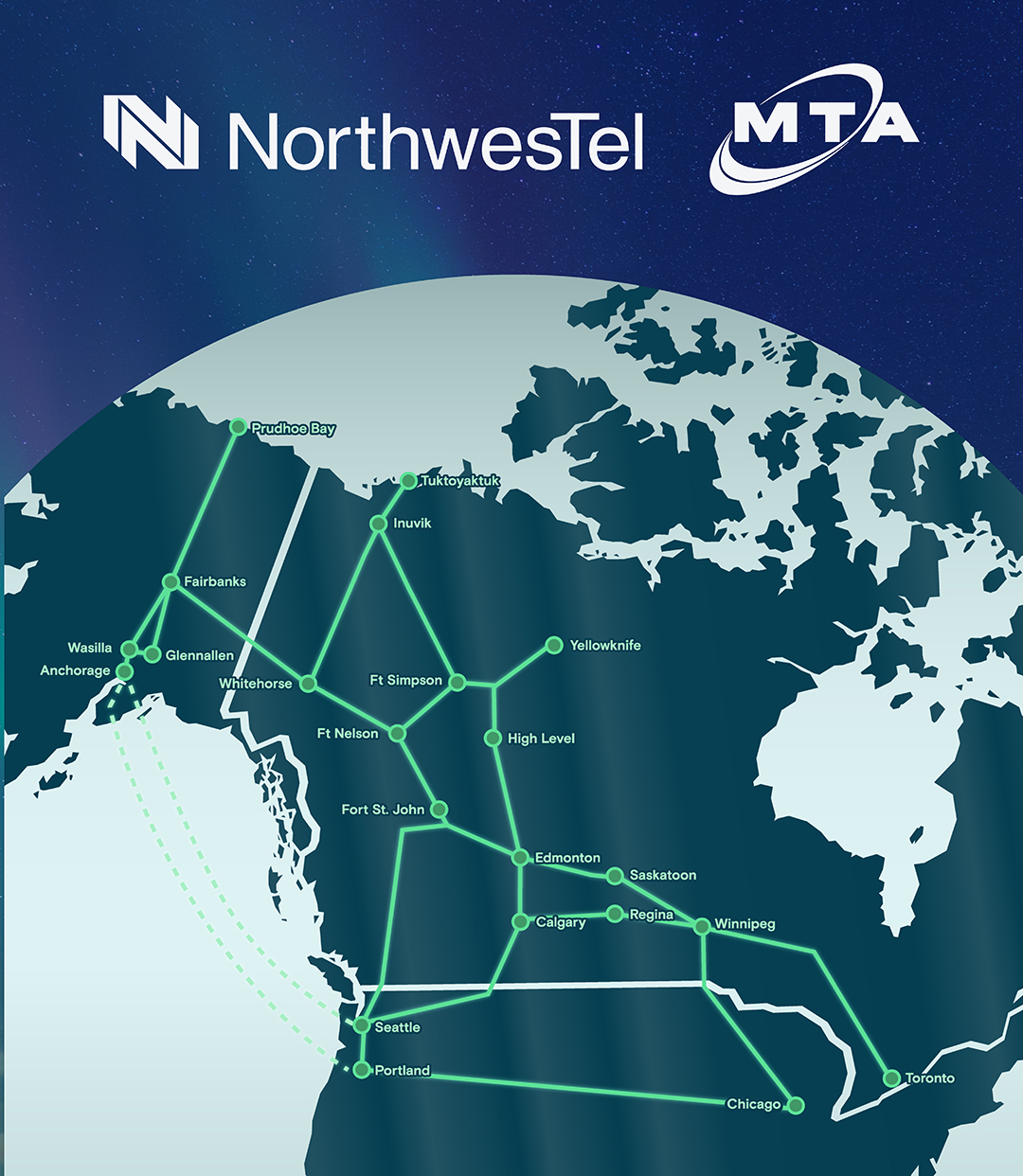
Northwestel and Matanuska Telecom Association: Connecting Alaska through Canada
When subsea cables fail, Alaska’s connectivity to the Lower 48 can be interrupted for weeks or even months. Northwestel, Canada’s leading telecommunications provider in the North, partnered with Alaska’s Matanuska Telecom Association (MTA) to deliver what Alaska has never had — a fully terrestrial route to and from the continental United States through Canada. By combining MTA’s AlCan ONE network in Alaska with Northwestel’s extensive fibre infrastructure across Northern Canada, this cross-border partnership provides true geographic diversity and operational resilience. The partnership demonstrates how Canadian infrastructure is critical to Alaska’s connectivity future, delivering faster repairs, incremental scalability, and independence from the seismic risks that threaten all subsea routes serving Alaska.
Beyond technology, this collaboration is a model for binational cooperation that creates shared economic value. The Northwestel-MTA route supports Fortune 500 companies, international telecommunications carriers, U.S. government customers, and satellite system operators who depend on reliable, resilient connectivity between Alaska and global markets. Together, they’re proving that Canada–U.S. partnerships aren’t just beneficial, they’re essential infrastructure for North America’s digital economy and national security.
NORAD Canadian detachment supports the iconic Iditarod race
The Canadian Detachment at Joint Base Elmendorf-Richardson in Anchorage plays a critical role in defending North American skies through NORAD. Members of the Canadian Armed Forces (CAF) work shoulder to shoulder with their U.S. counterparts to safeguard our shared skies and strengthen the security of both countries.
Beyond the mission, Canadians are deeply woven into Alaska’s community life. CAF members and their families volunteer at local food banks, help maintain Alaska’s trail system, and have proudly supported the iconic Iditarod Dog Sled Race for decades. Through the years they have prepared food caches, hosted Canadian mushers, and maintained the “Canadian section” of the trail in downtown Anchorage — ensuring teams can race safely through the city.
From continental defense to community traditions, the Canadian presence in Alaska reflects a close, trusted partnership rooted in shared responsibility, northern resilience.
Mining critical minerals: An Alaska–Canada partnership
Canadian companies play a vital role in Alaska’s mineral exploration and mining industry and help the U.S. secure critical minerals. Alaska’s incredibly rich geology has potential to supply valuable minerals like gold, copper, zinc, germanium, silver, and rare earths, crucial for modern technology and American security. Canadian expertise and investment help Alaska maximize its potential.
For more than 40 years, Canada’s Teck Resources, in partnership with NANA Regional Alaska Native
Corporation, has operated one of the world’s largest zinc mines in northwest Alaska. This collaboration has ensured
sustainable mining operations, created jobs, strengthened the regional economy, and reinforced U.S. access to critical minerals essential for
manufacturing, technology, and national security.
Highlights
- Canada is the #1 customer for most states
- 47 Canadian-owned businesses employ 6,350 workers in Alaska
- 76% of Canadian exports to the U.S. are raw materials, parts, and components used to create other goods in the United States
- Canada & the U.S. trade an average of $1.4 million in bilateral goods & services every minute of every day
Trade Data
Alaska exports $633 million in goods to Canada annually
Alaska exports to Canada by industry
- Agriculture: 15%
- Energy: 10%
- Equipment & machinery: 3%
- Minerals & metals: 69%
- Other: 3%
Top Alaska goods exports to Canada
- Ores, slag & ash: $435 million
- Fish & crustaceans: $77 million
- Fuel oil: $62 million
- Aircraft & parts: $11 million
- Wood & semi-finished wood products: $8 million
- Animal or vegetable fats, oils & waxes: $6 million
- Meat, fish & seafood preparations: $5 million
- Animal feed & food industry residues: $3 million
- Optical, medical & precision instruments: $3 million
- Trucks: $2 million
Alaska exports $113 million in services to Canada annually
Top Alaska services exports to Canada
- Transport: $51 million
- Travel (including for education): $36 million
- Business services: $13 million
- Maintenance & repair services: $5 million
- Charges for the use of intellectual property: $4 million
Alaska imports $1.3 billion in goods from Canada annually
Alaska imports from Canada by industry
- Energy: 57%
- Equipment & machinery: 15%
- Minerals & metals: 14%
- Transportation: 3%
- Other: 11%
Top Alaska goods imports from Canada
- Crude petroleum: $435 million
- Fuel oil: $281 million
- Ores, slag & ash: $127 million
- Compressors & pumps: $37 million
- Iron & steel tubes, pipes & sheets: $36 million
- Engines & turbines: $19 million
- Furniture & bedding: $14 million
- Heating, cooling & refrigeration equipment: $13 million
- Plastics & plastic articles: $11 million
- Natural gas & other gases: $10 million