

Idaho & Canada
Partners in security & prosperity
 Download the Idaho State trade fact sheet
Download the Idaho State agricultural fact sheet
Download the Idaho State trade fact sheet
Download the Idaho State agricultural fact sheet
 View interactive data on counties and districts
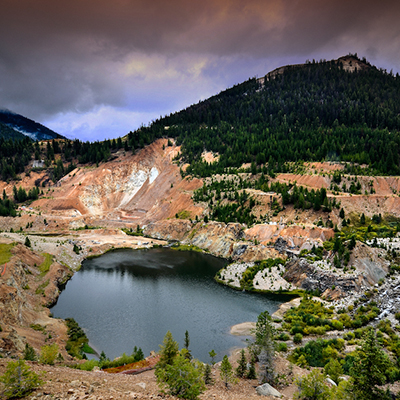
Canadian investment strengthens critical minerals partnership
Perpetua Resources brings innovative technologies to sustainably mine the brownfield Stibnite Gold Project, which is located in central Idaho, approximately 10 miles east of Yellow Pine. Rich in gold and antimony, this Canada–Idaho project will help the U.S. secure critical minerals required for the future of technology and defense industries.
The project will redevelop a site abandoned in the 1990s and provide long-term economic benefits, such as stable local jobs and business opportunities, to rural communities. It will invest more than $1 billion in Idaho and directly employ more than 500 individuals over the project’s 20-year lifespan. This is an example of how Canadian investment in Idaho can help local communities by creating jobs and providing expertise to help American technology and defense industries.
Ranching traditions shared between Idaho and Canada
The cattle industry has long been a vital link between Idaho and Canada, fostering economic and agricultural ties across the border. Canadian genetics and feed innovations help Idaho’s ranchers, while Canadian producers bring business to Idaho’s processing facilities to supply the U.S. market. This well-developed partnership thrives under shared standards for animal health and food safety, ensuring smooth cross-border movement of livestock and beef products. Beyond commerce, the relationship reflects a mutual commitment to sustainability and rural prosperity, making cattle not just an industry, but a bridge between two regions with deep ranching traditions.
Canada invests in Idaho
Exports to Canada support 8,200 employees in Idaho in addition to the 3,550 employees at Canadian-owned businesses across the state. Idaho exports $2.1 billion in goods and services to Canada.
Canadian-owned companies, including McCain Foods, Thompson Creek Mining, Power Engineers, Incorporated and Great American Snacks, are major contributors to Idaho’s economy. They employ residents in every sector and contribute to the local economy by paying salaries and local taxes and purchasing goods and services in their supply chain.
Highlights
- Canada is the #1 customer for most states,
including Idaho - 63 Canadian-owned businesses employ 3,550 workers in Idaho
- 76% of Canadian exports to the U.S. are raw materials, parts, and components used to create other goods in the United States
- Canada & the U.S. trade an average of $1.4 million in bilateral goods & services every minute of every day
Trade Data
Idaho exports $1.8 billion in goods to Canada annually
Idaho exports to Canada by industry
- Agriculture: 25%
- Chemicals: 17%
- Equipment & machinery: 9%
- Forest products: 5%
- Minerals & metals: 37%
- Transportation: 4%
- Other: 3%
Top Idaho goods exports to Canada
- Ores, slag & ash: $333 million
- Pearls, gems, precious metals & jewelry: $310 million
- Fertilizers: $211 million
- Live animals: $188 million
- Inorganic chemicals: $63 million
- Wood & semi-finished wood products: $60 million
- Prepared vegetables: $59 million
- Pasta, breads & cereal preparations: $56 million
- Agricultural machinery: $45 million
- Dairy products, eggs & honey: $43 million
Idaho exports $269 million in services to Canada annually
Top Idaho services exports to Canada
- Travel (including for education): $106 million
- Business services: $54 million
- Transport: $34 million
- Charges for the use of intellectual property: $33 million
- Financial services: $23 million
Idaho imports $1.2 billion in goods from Canada annually
Idaho imports from Canada by industry
- Agriculture: 30%
- Chemicals: 9%
- Energy: 6%
- Equipment & machinery: 14%
- Forest products: 19%
- Minerals & metals: 7%
- Plastics & rubbers: 4%
- Transportation: 3%
- Other: 8%
Top Idaho goods imports from Canada
- Animal feed & food industry residues: $86 million
- Softwood lumber: $86 million
- Prepared vegetables: $86 million
- Wood & semi-finished wood products: $85 million
- Fertilizers: $56 million
- Animal or vegetable fats, oils & waxes: $47 million
- Plastics & plastic articles: $41 million
- Salt, sulfur, earth & stone, lime & cement: $39 million
- Firearms & ammunition: $39 million
- Animal meats: $37 million